
About Us
News
The Team
The team consists of 19 people, all dedicated to making your stay as pleasant as possible!
General Manager
Samuel McInnis Major
Executive Assistant
Sylvie Patry
Infrastructure and Equipment Team Leader
Georges St-Laurent
Operations Coordinator
Éric Ouellet
Sales and Reservations Coordinator
Anne Gendron

Sales and Reservations Attendant
Guillaume Chenel
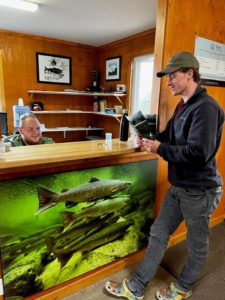
Salmon Fishing Guides
Gilbert Gagnon
Réjean Pelletier
Renaud Pelletier
Sébastien Garneau
Maxime Mimeault
Steve Whiting (also Assistant Protection Officer)
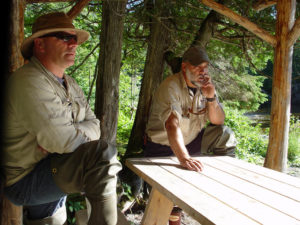
Field Activities Attendants
Éric Martin
Yves Pelletier (Assistant Protection Officer)
Richard Ducasse (Assistant Protection Officer)
Housekeeping Staff
Kathleen Lussier
Cathy Vienneault
Food Service Attendants at Pavillon du Petit-Saut
Arek Jackowski
Dominique Durand
Our Mission
To develop the region socio-economically within a sustainable development framework, prioritizing the promotion of activities that respect or foster the development of natural resource potential with a view to harmonizing and ensuring the sustainability of all human activities. To protect and manage the sustainability of natural resources by respecting biodiversity and the precarious status of certain species. To promote and defend local and regional socio-economic interests regarding the exploitation and development of natural resources.
Our Vision
Destination Chic-Chocs identifies its future role as being a major driver of socio-economic development for the local community. Through its transparency, professionalism, and recognition, the organization will be a model partner in the community. By setting high quality standards and offering professional services in the value-added recreational tourism sector, the organization will become the reference in this field in Gaspésie. The organization will continue to promote and defend the interests of wildlife and flora users vis-à-vis other interest groups. Finally, the organization will become a key player, and its standing as a leading organization in value-added recreational tourism will be recognized at the local, provincial, and international levels.
Our Values
- Importance of socio-economically developing Haute-Gaspésie.
- Confidence in the local community’s capacity to promote and socio-economically develop Haute-Gaspésie.
- Importance of working in partnership with all community stakeholders: citizens, merchants, elected officials, state representatives, etc.
- Importance of sustainable development: sustainability of socio-political, financial, and natural environments.
- Importance of respecting the natural environment (fauna/flora/water/air/soil).
- Importance of protecting natural resources.
- Belief in the development potential of sustainable recreational tourism in the region.
- Confidence in the local community’s capacity to exploit natural resources sustainably.
- Desire to promote and defend local interests regarding various issues related to socio-economic development and the exploitation of natural resources.
FISHING GUIDES
A BRIEF HISTORY OF GUIDES ON THE SAINTE-ANNE RIVER
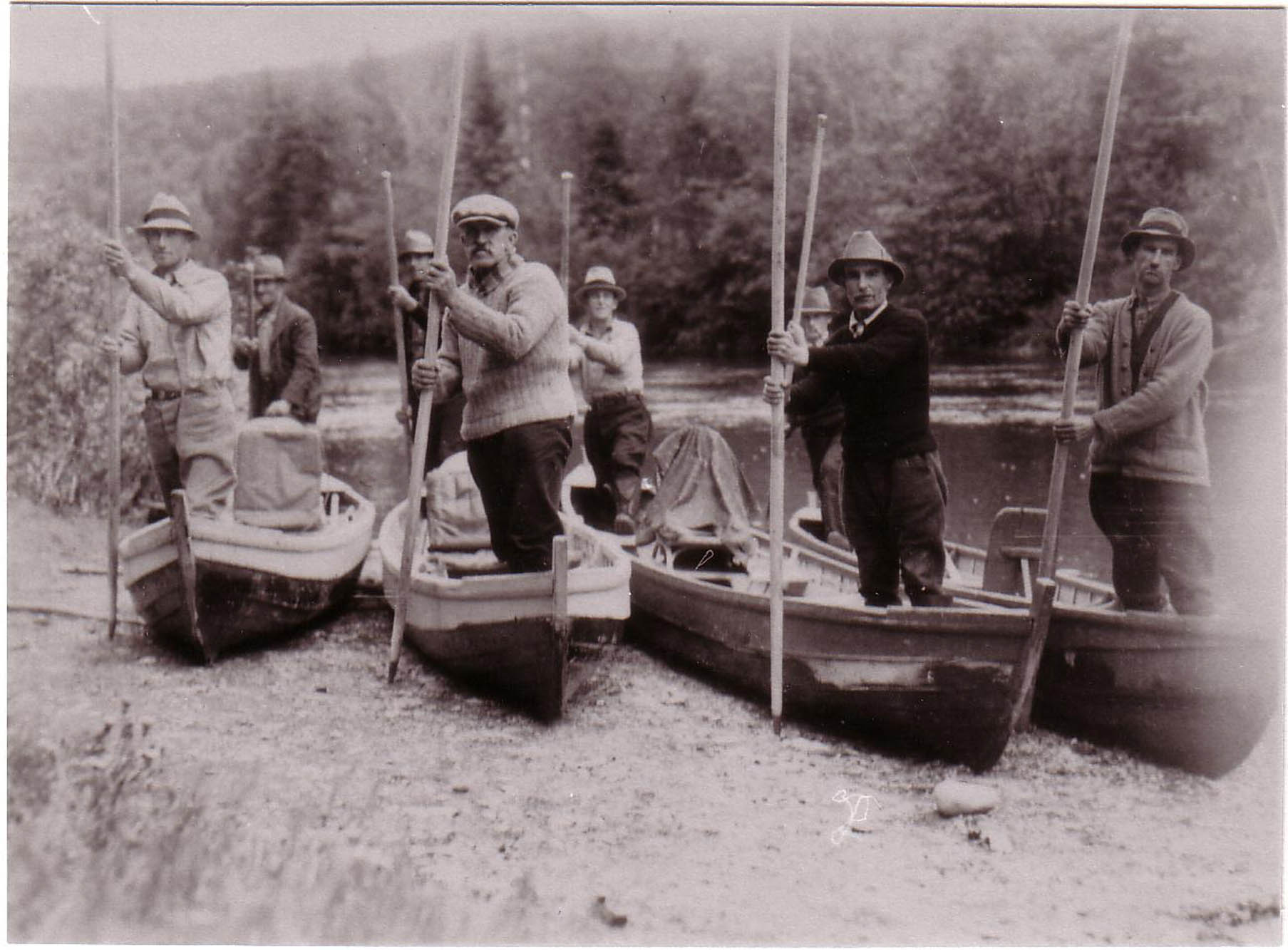
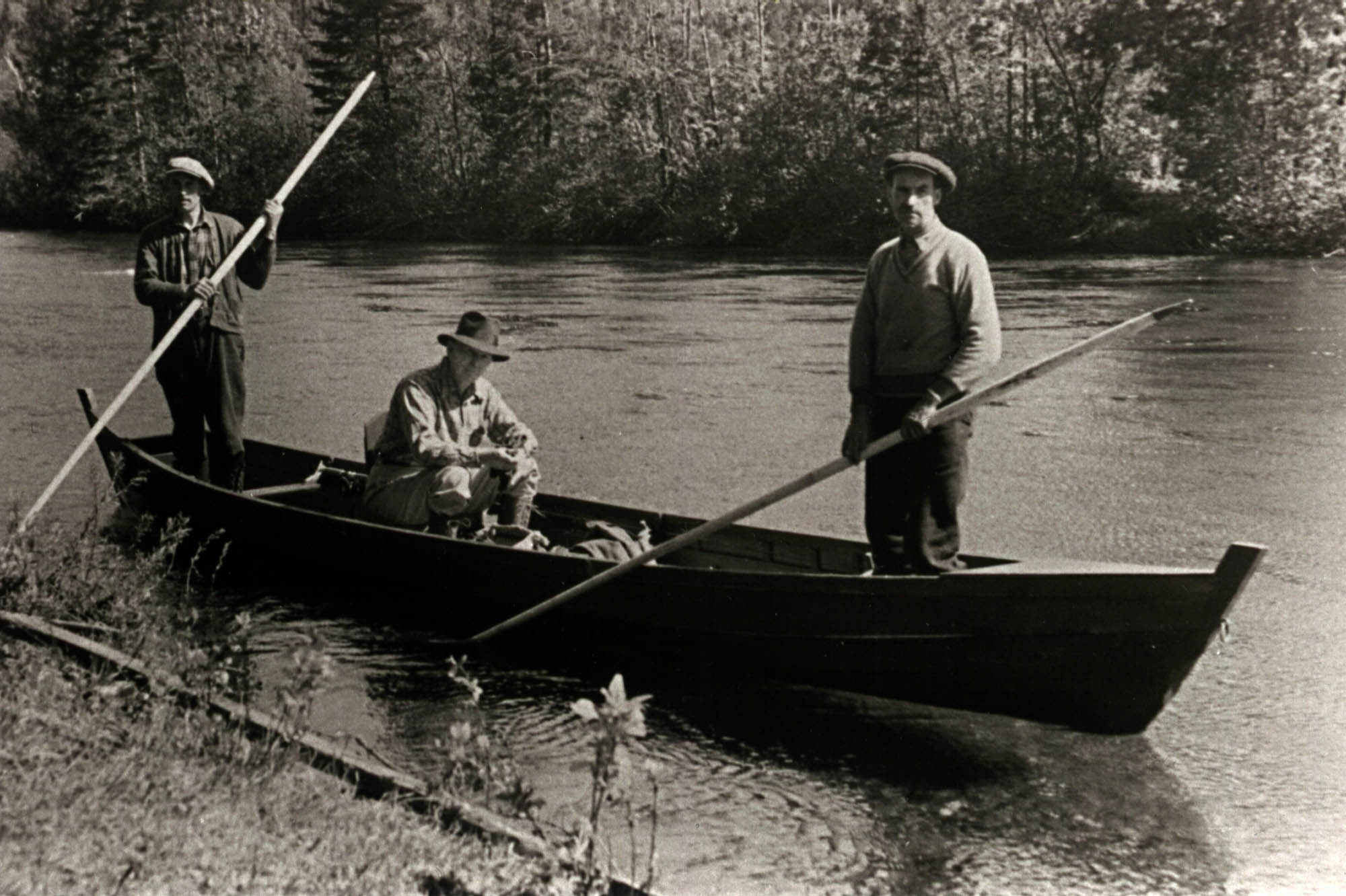
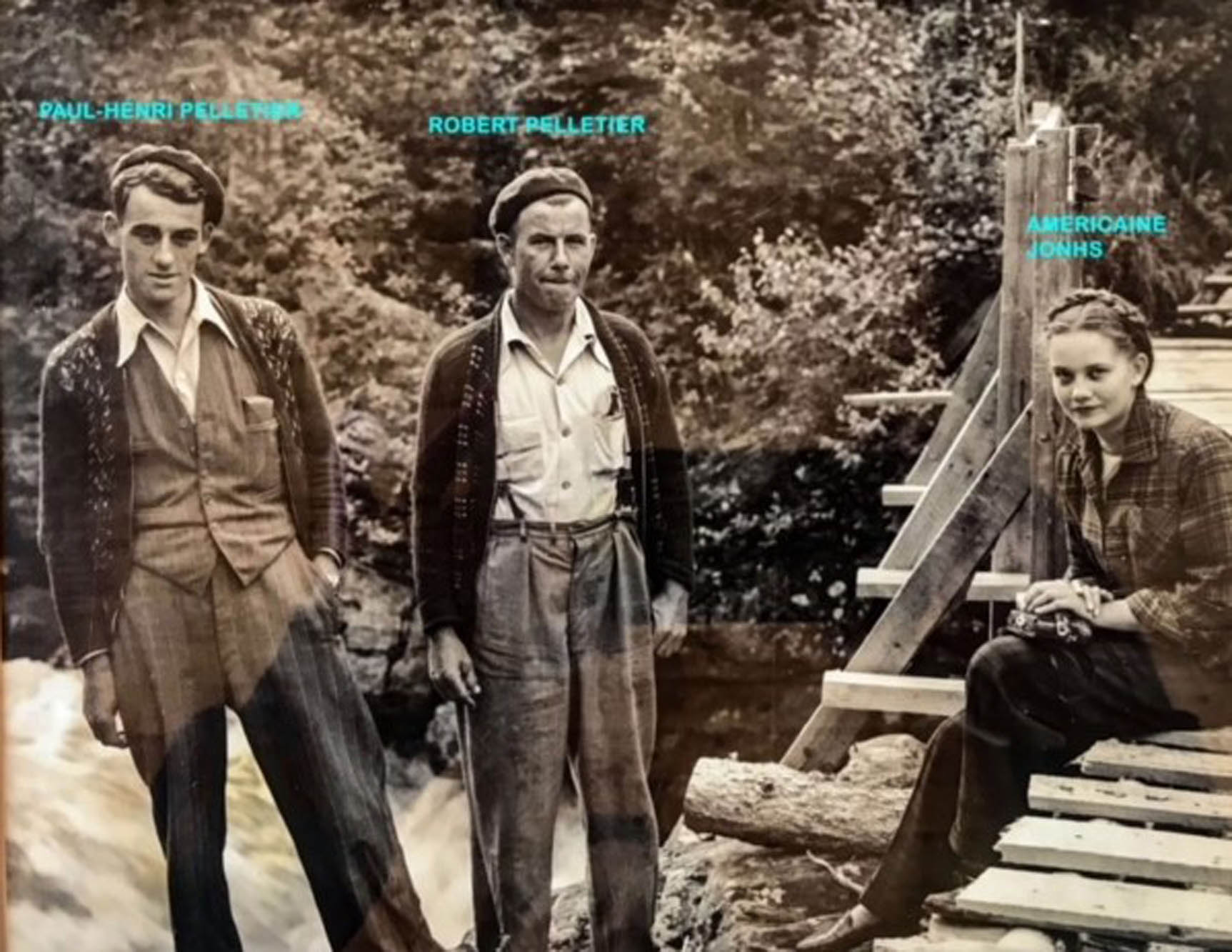
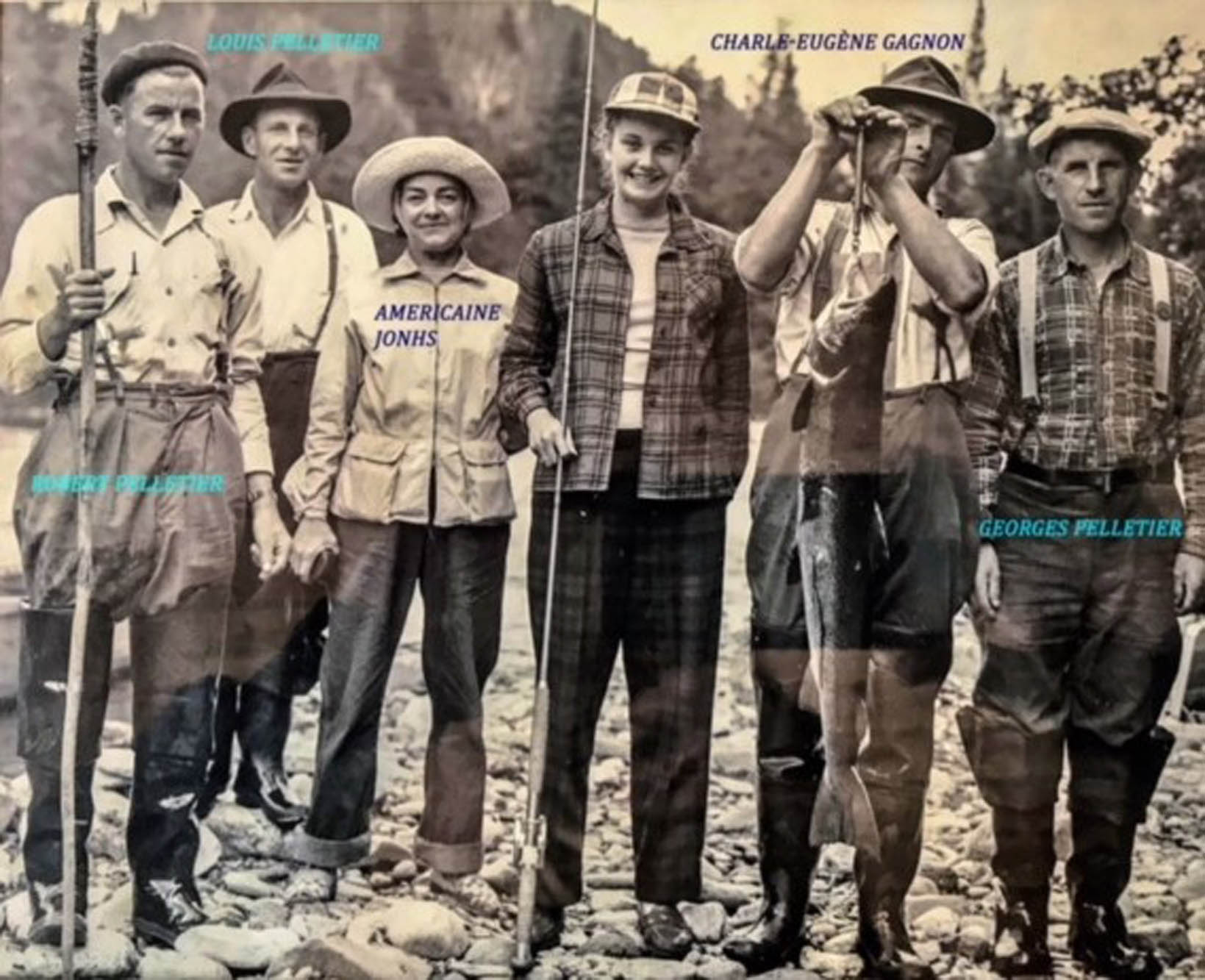
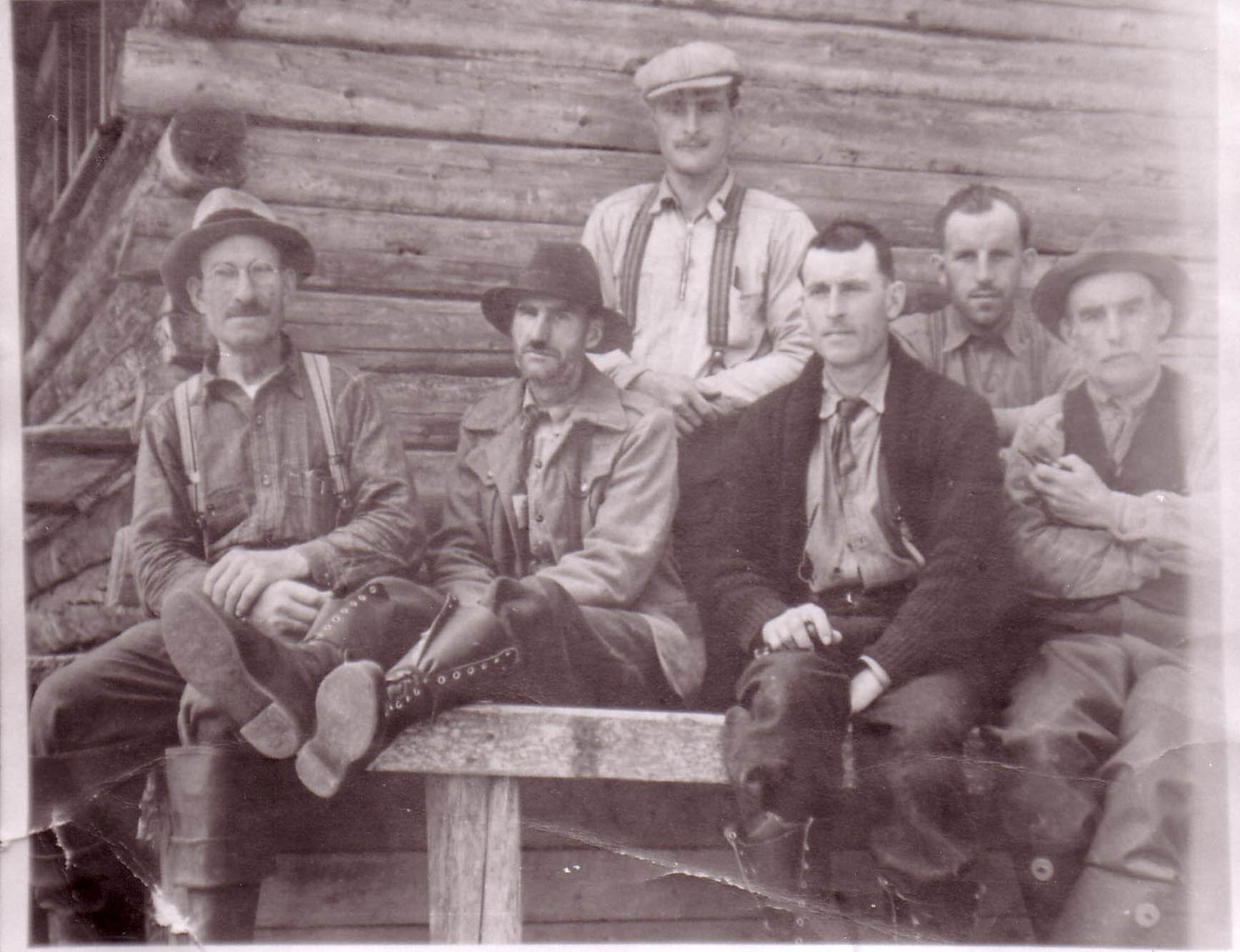
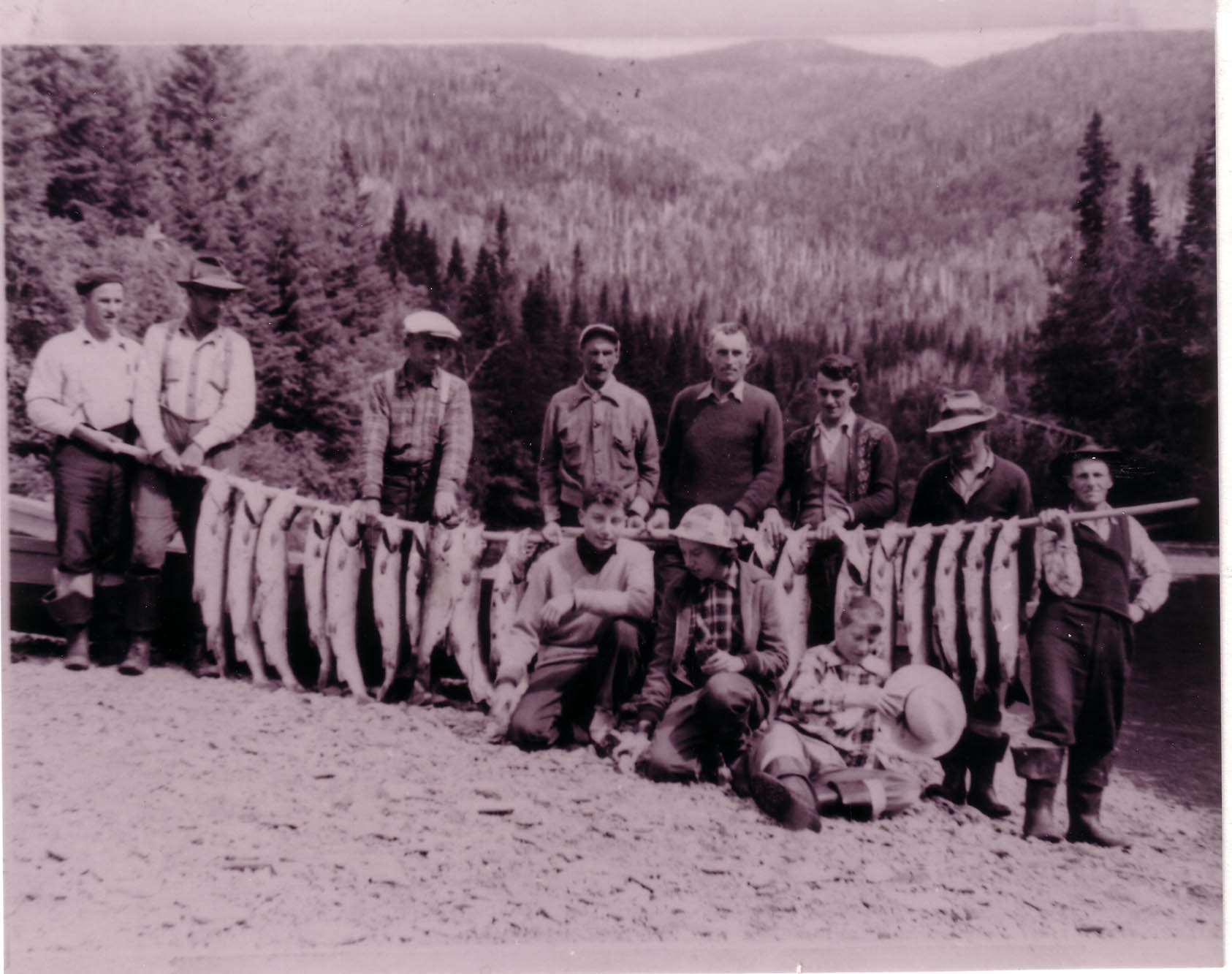
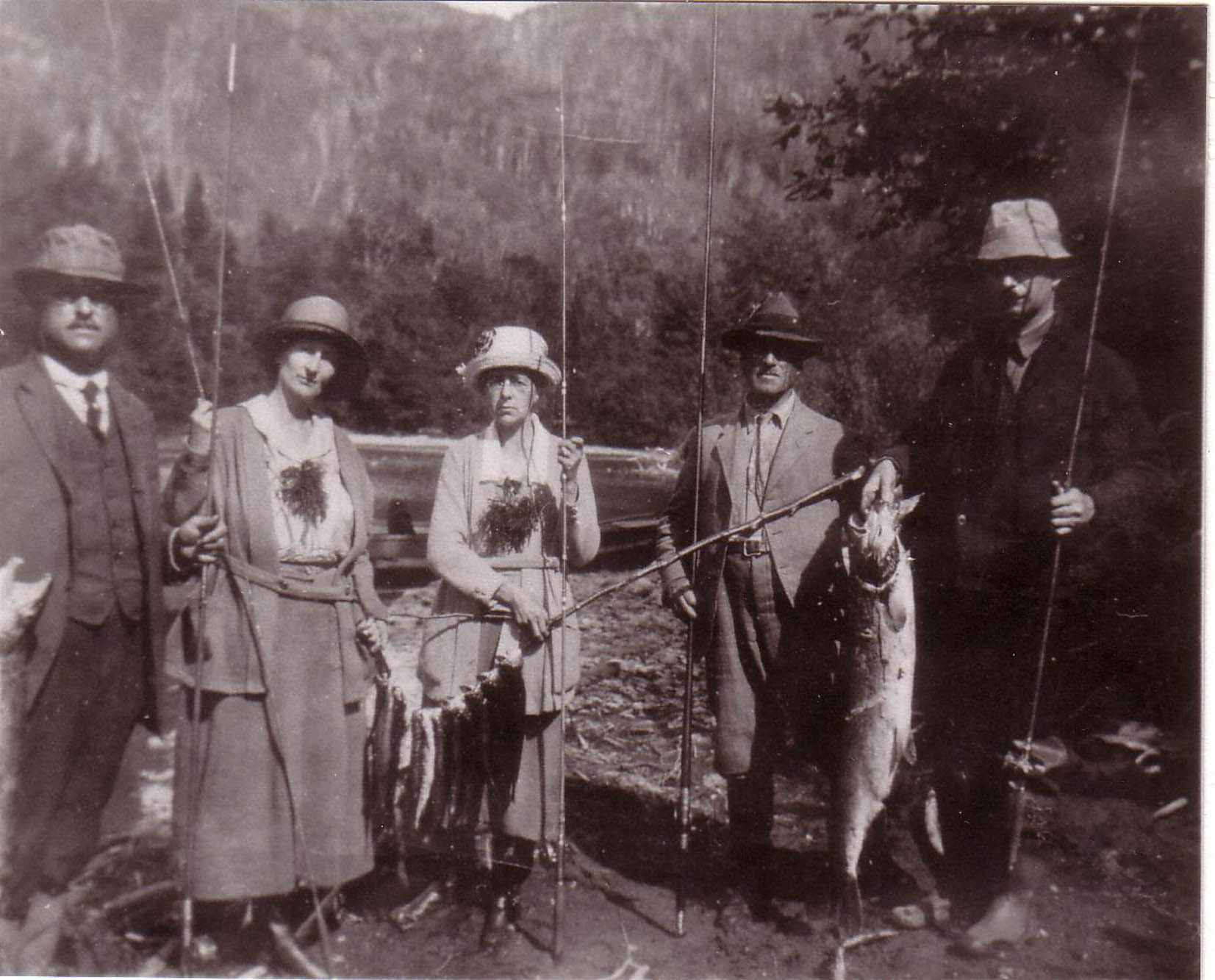
According to some sources, it was likely Henry Hogan who instigated fishing with boats and guides. This trade on the Sainte-Anne River dates back to around the 1880s. It is the most significant group of workers in terms of numbers and the tasks they must perform. The success or failure of a fishing excursion generally rests on them, and they are chosen for their in-depth knowledge of every nook and cranny of the river and the habits of the salmon that frequent it, as well as for their skill in maneuvering the boats during fishing trips.
During the Maurice Wertheim era (1935 to 1950), there were eight (8) guides forming four (4) teams of two (2) members, each leading a boat with an angler on board. The course of the Sainte-Anne River was divided into two sections, with the central point being the Sérénité Pool. Two teams of anglers would descend or ascend one of these sections during a day while the other two teams fished in the other section of the river.
The work of a guide is physically very demanding. They must “pole” (gauler — pushing with a ten-foot wooden pole tipped with iron at one end) against the current to propel the boat with an angler aboard, and be very skilled to prevent the boat from capsizing or to hold it steady. The most grueling part of the guide’s job is the constant harassment by black flies and other mosquitoes, against which they had no oil or cream. Only a small rustic smudge pot allowed them to ward off these pests slightly, ensuring some respite for guides and anglers so they could perform the art of salmon fly fishing.
Guides had to be ready early in the morning with all the necessary equipment for the fishing trip, but departure only took place around 9 or 10 a.m. At noon, a stop marked a break for the angler; however, the guides were required to build a fire, prepare the meal for the angler(s), and tidy everything up before resuming the fishing trip. Occasionally, these excursions extended until nightfall, around 8 p.m.
Guides worked six (6) days a week, from Monday morning to Saturday evening. Sunday was the only day of rest they had, which they used to fulfill their religious obligations.
The guides’ wages were slightly higher than those of the guardians, but the employment duration was very short, at most 6 to 8 weeks. In the Wertheim days, many guests succeeded one another to tease the salmon on the Sainte-Anne River and, generally satisfied with their experience, they rewarded the guides in kind with alcohol and other goods, or with generous cash tips.
A Family Affair…
One of the most famous families of salmon fishing guides on the Sainte-Anne River is the Pelletier family. Réjean, who is currently guiding, represents the fifth generation. The first was Olivier, the second Achille, the third Achille, the fourth Raymond, and the fifth Réjean.
The Gagnon family is also renowned for the competence of several of its members in salmon fishing. The duo of brothers Jacques and Gilbert Gagnon has guided an impressive number of clients over the last 40 years.
Our Canoe Fishing Guides in 2024
With Jacques having retired a few years ago, Gilbert Gagnon now teams up with Samuel Tremblay, a young guide benefiting from his vast experience! Joining this team is Simon Sylvestre, an experienced guide!
Although they are not related, the pair of guides known as “The Pelletiers” consists of Réjean, mentioned above, and Renaud. They have been working together for nearly forty years! That’s quite a marriage contract! As a major premiere and for the first time, a female guide, Myranie Lepage-Gagnon, will join the Pelletier team! No doubt she will bring a breath of youth and enthusiasm!
Wading Guide Services
With over 50 years of experience, Steve Whiting loves sharing his extensive knowledge of Salmo salar with his clients! Always ready to tell anecdotes, Steve knows the Sainte-Anne, Cap-Chat, and Madeleine rivers like the back of his hand!
Historical Background
A Great Fishing Story… The Sainte-Anne! With photos
The Sainte-Anne River is one of the jewels among the salmon rivers of Gaspésie. “The Sainte-Anne,” as it is called, stretches 70 km from its mouth bordering the St. Lawrence River to Lake Sainte-Anne further south. This river flows northward at the foot of the high peaks of the Chic-Chocs and crosses Gaspésie National Park. This geographical location ensures that “The Sainte-Anne” has exceptionally high-quality water, renowned for its clarity and coolness.
Atlantic salmon frequent the river up to the Sainte-Anne Falls, 50 km upstream, and colonize several tributaries. The presence of Atlantic salmon in “The Sainte-Anne” was one of the main reasons justifying the creation of Gaspésie National Park. Indeed, one of the four basic objectives was “to ensure the constant conservation of the salmon of the Sainte-Anne River.”
Salmon fishing has been practiced on the Sainte-Anne for centuries. Until the mid-19th century, fishing served for the subsistence of Indigenous people and Europeans who had colonized Gaspésie. From 1870 until 1967, control of fishing on the Sainte-Anne was ceded by the Quebec government successively to wealthy individuals and private clubs. The establishment of “private concessions” on salmon rivers in the 19th century responded to a need for resource protection and was facilitated by the emergence of sport fishing as a leisure activity within the Anglo-Saxon community of North America.
Information varies on this subject, but according to some, it was in 1870 that the Sainte-Anne River was first “leased” to a certain Henry Hogan, a Montreal hotelier. He held the privileges until 1904. Following him was a group of men from Great Britain (mostly officers) called the Sainte-Anne Fishing Club from 1905 to 1906; a man named Percy Chubb from 1906 to 1930; his nephew Hendon Chubb from 1930 to 1935; Maurice Wertheim from 1935 to 1950; and finally, his wife Cécile Wertheim from 1950 to 1968.
In 1969, the Quebec government took back control of fishing on “The Sainte-Anne” and made it more accessible to the public. In 1993, in a movement of delegation towards local and regional communities, the government entrusted the management of fishing and other activities related to the Sainte-Anne River to a local organization, the Association Chasse et Pêche Gaspésienne Inc. of Sainte-Anne-des-Monts, which became Destination Chic-Chocs in 1999. This association has therefore been leading the restoration of habitats and infrastructure, resource protection, marketing of fishing, and diversification of activities related to the Sainte-Anne River for nearly 30 years. This work is entirely within a sustainable development perspective, meaning it favors activities and interventions that respect the diversity and sustainability of natural resources.
HISTORY OF THE SAINTE-ANNE RIVER
Information from the Archives of the Ministry of Forests, Wildlife and Parks
The Gaspésie region, and more specifically the territory of the Gaspésie Park, is a place rich in terrestrial and aquatic wildlife. It is home to the three great cervids of the eastern continent: the moose, the caribou (the only place south of the St. Lawrence River where a herd survives), and the white-tailed deer since the early 20th century. The torrential rivers are the habitat of Atlantic salmon and sea trout, and the lakes teem with red trout and brook trout. It is also important to know that the Cap-Chat/Sainte-Anne-des-Monts region has only been permanently inhabited by white settlers since the early 19th century, and this population was not very significant for many years.
Sport Salmon Fishing
The villages of Cap-Chat and Sainte-Anne-des-Monts were born in the early 19th century from commercial fishing for cod, mackerel, and herring. The first mention of sport fishing in the region is in 1870 on the Sainte-Anne River, referring to fly fishing for salmon. It is worth recalling that to preserve the Atlantic salmon from complete destruction, the government introduced strict regulations, hired fishery guardians, and leased the exclusive sport fishing rights on most salmon rivers in the province of Quebec. Thus, in 1870, the Sainte-Anne River was leased to Henry Hogan, a Montreal hotelier. He came regularly every year to cast his flies on the Sainte-Anne River. Meanwhile, the Cap-Chat River was in a critical state regarding salmon, which had practically disappeared due to the erection of a dam obstructing the river’s course and preventing salmon from reproducing. The salmon fishing rights of the Madeleine River belonged to the owner of the Madeleine Seigneury, Mr. Ross of Quebec City.
The sport fishing privileges of the Sainte-Anne River belonged successively to Henry Hogan (1870-1904), a group of men from Great Britain (1905-1906), Percy Chubb (1906-1930), Hendon Chubb (1930-1935), Maurice Wertheim (1935-1950), and Cécile Wertheim (1950-1968). The last four tenants were Americans living in the northeastern United States. The sport of salmon fly fishing was generally the domain of an Anglo-Saxon and Neo-Canadian elite. Salmon fishing took place from mid-June to late July, six days a week, and sometimes until nightfall. To allow some rest for the guides and to honor the Lord’s Day, there was generally no fishing on Sundays. From 1870 onwards, fishing rights tenants regularly invited friends and acquaintances to share the wonderful sensations provided by salmon fly fishing. There were never more than four anglers at a time on the Sainte-Anne River, dividing into two groups to survey the downstream or upstream sections of the river in search of the finest catches. Anglers traveled the river in flat-bottomed boats, nicknamed “Gaspé canoes,” led or driven by two experienced guides. These guides stood at the ends of the boats and poled (“gaulaient”) powerfully to descend or ascend the river’s current.
For many years, this activity was mostly the preserve of foreigners, with residents of Sainte-Anne-des-Monts working to monitor and protect the tenants’ fishing privileges and guiding them on their numerous excursions. In return for these services, they received suitable remuneration.
The history of one of the founding families of Sainte-Anne-des-Monts, the Pelletier family, nicknamed the “Muskrats,” is intimately linked to the history of sport salmon fishing on the Sainte-Anne River. From father to son for nearly a century, this family passed down the secrets of the Sainte-Anne River salmon and conscientiously guided anglers.
Mrs. Effie Bignell left us a wonderful description of a salmon fishing excursion on the Sainte-Anne River in 1906. She informs us that “in each boat, there is a passenger and two guides, and it is not uncommon for the boats to scrape the river’s rocky bed while crossing rapids. The guides must then get out of the canoes and haul the boats with the passengers inside. The guides are sturdy oarsmen who pilot the boats with dexterity through turbulent waters thanks to the propulsion of heavy metal-tipped gaffs (poles). When the angler has chosen their fly and their tackle is in good order, they prepare for the great engagement. One then hears the whistling of the long, fine line, and in response to the angler’s artistic maneuvers, it twirls now backward, now forward, the fly invariably landing in the same spot. After a royal battle with the salmon, the angler signals to the shore, and immediately a guide armed with a gaff jumps cautiously into the water. The sagacity of the sportsman’s gestures and the dexterity of their assistant are a guarantee of success, and in a few moments, the gaffer holds his prey at arm’s length. The salmon is placed on the shore where a single blow is dealt to the back of the head to end the fight.”
The Sainte-Anne River was one of the first salmon rivers to be “de-clubbed” (opened to the public) in Quebec. In 1968, the Ministry of Tourism, Hunting, and Fishing took full charge of the management of the “salmon” resource of this river, to the great delight of fishing enthusiasts in the province of Quebec.
The Northern Gaspé Region
Our research does not reveal, to date, that there were significant harvests of the salmon resource in the Sainte-Anne or Cap-Chat rivers. The oldest document establishing the first method of fishing on the Sainte-Anne River comes to us thanks to the travel account of Abbé Ferland in June 1836 on the Gaspé coasts. He says of this fishing:
“Armed with torches, the fishermen are in search of the salmon which ordinarily goes up to spawn in the river, towards the middle of June. The time of its arrival has passed, and none has yet been taken. So, there is concern about this circumstance, and every evening for a few days, fishermen have come to scan the bottoms where it is accustomed to stop before entering the Sainte-Anne River.”
As we can see, the first inhabitants of Sainte-Anne-des-Monts borrowed their fishing technique from the Indigenous people and already knew the salmon’s habits to capture it easily. It is probable that the salmon fishing revealed here was done for commercial purposes and to meet personal needs. Salmon spearing was even practiced by Sir William Logan during his geological expedition in 1844, to break the monotony of the work. He went out with his men on harpoon and torch fishing excursions with the intention of capturing salmon on the Cap-Chat River for food.
Until the middle of the 19th century, fishing pressure on salmon in the Sainte-Anne and Cap-Chat rivers was likely insignificant, given the small local population and the distance from markets. Only 37 families lived in Sainte-Anne in 1836 and seven in Cap-Chat. The first resident family, that of Jean-Baptiste Sasseville, only settled permanently in Sainte-Anne around 1815. It is also observed during this era that the engine of economic activity in the region was fishing (especially cod). Wood was cut and land cleared only to meet personal needs. It was during the 1830s that a first company interested in the fish trade settled in Sainte-Anne-des-Monts: the John Le Boutillier Company. It was set up by the association of Mr. Buteau, a merchant from Quebec City, and John Le Boutillier, Seigneur of Sainte-Anne. A little later, the latter, J. Le Boutillier, became the sole owner of this business and Seigneur of Sainte-Anne-des-Monts. The state of our research allows us to hypothesize that increasingly strong fishing pressure was exerted on the salmon resource of the Sainte-Anne and Cap-Chat rivers starting from 1830, intensifying until the mid-19th century, thus jeopardizing the survival of this fish species.
Ineffectiveness of Early Conservation Actions
This fishing pressure could not last indefinitely. It was constantly increasing and reaching certain sectors that had hitherto been spared. Personalities such as Richard Nettles, as well as several British officers stationed in Canada—great enthusiasts of sport salmon fishing—rose up against these destructive practices.
Attempts were made to reduce the number of commercial salmon fishing licenses in the early 20th century to ensure the species’ survival. Licenses were not renewed for those leaving the fishing region, or upon the death of a holder; for his heirs, if there were several, only one license was renewed. This political decision was added to another initiative by salmon river tenants who bought out, leased, or established arrangements with commercial fishermen to reduce fishing effort on the salmon resource. Such agreements were found on most Quebec salmon rivers, such as the Grand Cascapédia, the Grande Rivière, the Saint-Jean, the Cap-Chat, and the Sainte-Anne.
In the first half of the 19th century, the majority of salmon caught for trade was salted and barreled. The development of communications, railways, and steamships significantly reduced transport time and favored the advent of new salmon preservation techniques: canning and ice storage. This latter technique, icing, became widespread around 1870, as fishermen obtained much better prices for fresh salmon at $23.25 per barrel compared to $16.00 per barrel for pickled salmon.
The Regional Situation
As seen previously, the great pressure exerted on the salmon resource in Sainte-Anne-des-Monts likely occurred between 1830 and 1858, the year the new regulations came into force. Pierre Fortin, Superintendent of Fisheries, gives us this description of the Sainte-Anne River in 1858:
“The Sainte-Anne River was once very full of fish. But for some years now, the quantity of fish frequenting it has greatly diminished. It is barely now that twenty to thirty tierces (barrels) of salmon are taken. One must undoubtedly attribute this great decrease in the river’s product to the bad practice some people have in this place of going ten, twenty, and even thirty miles up this river to take salmon in the deep pools where this fish goes to deposit its eggs.”
In closing, Mr. Fortin hoped that the new salmon law would better protect it in the future and avoid its destruction in the Sainte-Anne and Cap-Chat rivers. Already in 1858, citizens wanted to enforce the regulations; these were notables, namely Messrs. Rousseau, Dugas, and Sasseville.
In 1860, during one of the first visits by the Inspector of Fisheries of the Gulf of St. Lawrence, he issued three commercial salmon fishing licenses to fishermen from Sainte-Anne-des-Monts. They established their salmon fishing stations at the first rapids of the river where the tide ceases to be felt, about two miles from the sea. During the second half of the 19th century, the number of commercial salmon fishermen was minimal—two or three—for the entire Sainte-Anne-des-Monts subdivision, which then included the territory of the Cap-Chat, Sainte-Anne-des-Monts, and Madeleine rivers. The number of salmon catches also remained limited.
The history of sport salmon fishing on the Sainte-Anne River begins, according to our oldest testimonies, the year the salmon river leasing policy was implemented in 1871. It is probable that before this time, sport fishermen occasionally fished for salmon in this river, but our research in this direction has remained in vain. These first years of angling are shrouded in mystery; only a few scraps of information dating from 1872-73 have reached us to date.
The region’s first fishery guardian, J.L. Létourneau, describes this first angling on the Sainte-Anne. He says (speaking of the river) that “it was fished for the first time…; only 8 salmon were taken in the space of a week. This meager success is entirely due to strong and incessant floods.” Fishing effort also remained restricted the following year, although the fishery guardian tells us it was better than the previous year despite the high waters of the river and the fact that it was fished for only 4 days.
It is also this source that indicates for the first time the mode of operation of angling on this river, namely the leasing of fishing rights and privileges, and it is probable that this management mode had been in place since 1870. However, we know nothing of this first tenant; whether it is the same person who held the rights starting from 1874 remains a good hypothesis. From 1874 to 1996, the Sainte-Anne River experienced five administrations, divided into three main categories: management of the salmon resource by the private sector via tenants from 1874 to 1968, by the government apparatus (Ministry of Tourism, Hunting, and Fishing) from 1968 to 1987, by the Société des Établissements de Plein Air du Québec (SÉPAQ) from 1987 to 1992, and by the local community (L’Association Chasse et Pêche Gaspésienne Inc.) from 1993 to 1999. Since 1999, the Association Chasse et Pêche Gaspésienne has become Destination Chic-Chocs Inc. and still manages the Sainte-Anne River.
The Managers
Henry Hogan (1874-1905)
It seems that Henry Hogan held sport fishing rights on the Sainte-Anne River since 1874 (and perhaps even from 1870). That year, 1874, he acquired lot #35 of the west range of the Sainte-Anne River on September 19, likely after the fishing season. As early as the following year, the fishery guardian identified him as the person who had rented the best fishing post on the river. This statement also reveals the possibility of multiple tenants of sport fishing rights for this period, which is reinforced when we learn from the fishery guardian that Mr. Hogan did not fish in 1875 and that 69 salmon were caught by line.
We are certain, however, that from 1885, Mr. Henry Hogan was the sole tenant of the river’s rights and that he paid a rent of $230 to the Quebec government at that time. He kept the exclusivity of this privilege until his death, which then became the property of his heirs. It was also during the same period, 1883-85, that Henry Hogan acquired the angling rights of the Grand Pabos River, for which he paid an annual rent of $80.
He kept the rights on that river until 1887, when he sold them to J.R. Wilson. The rent then required by the government amounted to $400 annually. According to records, Henry Hogan did not abuse his fishing rights on that river, which was said to be well-populated with salmon at the time of his acquisition.
Mr. Henry Hogan was a prominent Montreal hotelier. Since 1850, he and his family owned the luxurious St. Lawrence Hall hotel, and he remained its owner until his death. He married twice, probably to two sisters, Sadie, and died on October 9, 1902. His widow Margaret Sadie then inherited his assets and sold to the duly incorporated Sainte-Anne-des-Monts Fishing Club on December 16, 1904, the property of lot #35 of the west range of the Sainte-Anne River with “the building and improvement there erected and… including camp, equipments…” for the sum of $375.
Mr. Hogan came to fish but very irregularly on the Sainte-Anne River and for very variable periods of time, and with more or fewer guests. Mr. Henry Hogan’s main achievement was to have built a camp at Plaqué Maison, to have probably instituted the method of fishing with boats and guides, to have likely named most of the river’s pools, and to have contributed to a certain recovery of the salmon population in the river by buying back a certain number of commercial salmon fishing licenses in the Sainte-Anne-des-Monts region.
The Sainte-Anne-des-Monts Fishing Club
This club brought together Lieutenant-Colonels Louis-Edward Starkey, Thomas Randle Starkey, Arthur Henry Starkey, Captain William Henry Lambton, all from England, as well as Charles Henry Bulwer Caldwell from Ireland. It is important to note that this is the only multi-member tenant to hold sport fishing rights in the entire history of the river. This club retained ownership of the river’s fishing rights for only a single fishing season, that of 1905, as they acquired them in December 1904 and resold them in June 1906.
The sale of the sport fishing right lease underwent a considerable increase, from the $500 required by the government in 1899 to the sum of $1500 in 1905. During the short time this club held the rights, it built the magnificent “Camp Serenity,” which served as a residence or “club house” for the river tenant and his guests. The guide or guardian employees then lived in the old residence built by Mr. Hogan on the banks of the Plaqué Maison and Fosse aux fers (Iron Pool) pools, designated as the “Camp house for boatmen.”
Percy Chubb (1906-1935)
It was at the beginning of the 1906 fishing season that Percy Chubb, a prominent broker with the Lloyd insurance company of New York, bought the rights to the Sainte-Anne River. In the deed of sale, the existence of several buildings and lots of land is revealed: “parcel of land generally know by the name Fosse à fer Camp” (measuring 134 acres), “Lot # 35 west range with the club house and other building and improvement…” “and all camps boats any improvement including a fishing rights on the frontage to the river and house for boatmen.”
The buildings mentioned in this deed were likely all rustic constructions, made of round logs, piece-on-piece, probably of the same type as those at Petit Sault. Most of these buildings have now disappeared; they all, without exception, burned down during the great fire of 1959.
Percy Chubb, according to some citizens of Sainte-Anne-des-Monts who knew him, was passionate about sport salmon fishing. In addition to the fishing rights of the Sainte-Anne River, he held rights on the Cap-Chat River from 1907 to 1913 inclusive, for which he paid a royalty of $150 to $200 annually, and during the same period, he acquired exclusive fishing rights on the entire territory watered by the Sainte-Anne River for the modest sum of $160. We also believe he was a hunting enthusiast.
Percy Chubb died aboard the train bringing him to Sainte-Anne-des-Monts on June 14, 1930, near Drummondville. According to his will, his nephew Hendon Chubb inherited the majority of assets, including the properties and privileges relating to the river. According to citizens of Sainte-Anne-des-Monts who knew Hendon Chubb, he was not passionate about salmon fishing and neglected this activity.
Maurice Wertheim (1935-1968)
On October 2, 1935, Hendon Chubb sold to Maurice Wertheim for the sum of $7,500 all rights, properties, and privileges related to sport fishing on the Sainte-Anne River. This deed of sale included the purchase of lot #31 west range on which the Fosse à fer camp stands; lot #35 west range on which the club house (Camp Serenity) is built, as well as other structures, sport fishing rights on the river, and the various lease agreements for fishing rights from the owners of lots 6, 7, 8, 9, 10, and 11. Maurice Wertheim was a prominent businessman from New York City where, according to our information, he worked primarily in real estate, owning several important buildings in that city. Just like Percy Chubb, Maurice Wertheim was passionate about salmon fishing, and he devoted much time and money to satisfying this passion. It is probable that he came every year to fish for salmon for a few weeks with a group of friends, but he remained the sole tenant of the river’s rights. Among Maurice Wertheim’s guests, the most prestigious was General Marshall, who reportedly came during World War II. It was also around the same time that Mrs. Cécile Berlage Wertheim was initiated for the first time into the art of salmon fishing on the Sainte-Anne River. It should be noted that this lady was not married during these first visits and that she spoke fluent French. She married Maurice Wertheim a few years later, and upon his death on May 23, 1950, he bequeathed her all rights and properties related to fly fishing on the Sainte-Anne River.
Mrs. Cécile B. Wertheim assumed management of the Sainte-Anne River from 1950 to 1968. However, it seems that from 1957, a club was formed bringing together a few friends, likely to share the costs, charges, and obligations related to salmon fishing on the Sainte-Anne River. It was Mrs. Wertheim who presided over the destiny of this club, and according to our information, she remained the sole and unique tenant of the river, and this club existed only by her will.
The Wertheim couple’s most significant achievements in Sainte-Anne-des-Monts were the establishment of a fish hatchery in 1947 and its operation until 1965, which was ensured by Olivier Pelletier. In addition, this family bought or leased several salmon fishing rights, both sport and commercial, and erected most of the buildings currently present at Petit Saut. Under the Wertheims’ direction, about fifteen people from Sainte-Anne-des-Monts found remunerative seasonal occupation. The jobs were distributed as follows: a business agent or representative, a head guide or superintendent, 8 guides for the fishing season, 4 river guardians, a fish culturist, a cook, and one or two domestic servants. We must also emphasize that for each fishing season, the Wertheim couple was accompanied to Sainte-Anne-des-Monts by a secretary or butler.
A deputy minister of the M.T.C.P., L.A. Richard, estimated in 1958 at nearly $50,000 the annual expenses incurred by Mrs. Wertheim to improve fishing conditions, keep her camps in good condition, and receive her friends. She also paid rent of nearly $4,000 to the provincial government throughout this period, except for the war years when the rent was substantially reduced to $2,900. The last lease signed in 1966 between the M.T.C.P. and Mrs. Wertheim set the annual rent for the river’s sport fishing privileges at only $100, given the government’s desire to take back management of the salmon resource on this river, the state of this resource, the existing infrastructure paid for by Mrs. Wertheim which would become government property upon lease expiration, and the labor costs assumed by the tenant. This last lease also reduced the river’s rental territory; the M.T.C.P. thus kept fishing rights for the section between the Malcom Pool and Grand Plaqué, offering it primarily to anglers staying at the Gîte du Mont-Albert hotel.
Mrs. Wertheim left Sainte-Anne-des-Monts permanently in 1968, leaving behind a very positive image.
The Guides
This was the most significant group of workers in terms of numbers and the tasks assigned to them. The success or failure of a fishing excursion generally rested on them, and they were chosen for their in-depth knowledge of every nook and cranny of the river and the habits of the salmon frequenting it, and for their skill in maneuvering the boats during fishing trips. It was probably the first tenant of the river’s rights, Henry Hogan, who first used guides during his fishing excursions and transmitted this particular fishing method to his successors. In Maurice Wertheim’s time, there were 8 of them forming four teams of two members, each leading a boat with an angler on board. The course of the Sainte-Anne River was divided into two sections, with the central point being the Serenity Pool. Two teams of anglers would descend or ascend one of these sections during a day while two other teams fished in the other section of the river.
The work of a guide is physically very demanding; one must “pole” (gauler — push with a ten-foot wooden pole tipped with iron at one end) against the current to propel the boat with an angler aboard, and be very skilled to prevent the boat from capsizing or to hold it steady. The most grueling part of the guide’s function is the constant harassment they are subjected to by black flies and other mosquitoes, against which they had no oil or cream to ward them off. Only a small rustic smudge pot allowed them to keep these pests away slightly and ensure a little respite for guides and anglers so they could perform the art of salmon fly fishing.
Guides had to be ready early in the morning with all the material required for the fishing excursion, but departure did not generally take place before 9 or 10 in the morning. At noon, a stop marked a break for the angler; however, the guides were required to build a fire, prepare the meal for the angler(s), and tidy everything up before resuming the fishing trip. Depending on the anglers’ temperament, the temperature, and the success or lack thereof of the fishing, these excursions sometimes extended until nightfall, around 8 p.m. Guides worked 6 days a week, from Monday morning to Saturday evening, Sunday being the only day of rest they had, which they used to fulfill their religious obligations. The guides’ wages were slightly higher than those granted to guardians, but the employment duration was very short, at most 6 to 8 weeks. In the Wertheim days, many guests succeeded one another to tease the salmon on the Sainte-Anne River, and generally satisfied with their experience, they gratified the guides by giving them rewards in kind such as alcohol or generous cash tips.
Secondary Personnel
In addition to workers employed to guard or guide on the river, tenants recruited from the local population for the fishing season: a cook to prepare food for them and their guests, and one or two domestic servants to handle housekeeping of the buildings. These latter staff prepared the buildings before the tenants’ arrival, cleaning them from top to bottom, and ensured everything was properly stored at the end of the fishing season. (Furniture was suspended with ropes attached to the ceiling to counter small rodents that damage them). In the Wertheim era, they established a salmon hatchery and for this purpose hired Mr. Olivier Pelletier and his son from 1947 to 1965 to build and look after the hatchery. They received a few thousand salmon fry from the Gaspé hatchery in the spring of each year and cared for and fed them until the small salmon were released into the Sainte-Anne River.
Tenants of sport salmon fishing rights also contributed to the regional economy by purchasing various goods from local merchants: furniture, hardware items, food, etc. Moreover, every year in the Wertheim era, they bought an appreciable quantity of wooden boxes from local artisans for transporting salmon, and hired the services of regional citizens to transport anglers, salmon, or other goods from Sainte-Anne-des-Monts to Matane, where there was a railway station, doing so regularly throughout the fishing season.
The Anglers
The salmon anglers who visited the Sainte-Anne River throughout the private club period fall into two main categories: the tenants of the salmon fishing rights and their guests. We know almost nothing about this latter group, other than that they were very numerous in coming to fish on the Sainte-Anne River. These guest anglers came from the highest classes of American society—military, governmental, and industrial—and unfortunately, the collective memory of our witnesses has forgotten their names, with the exception of one or two, such as General Marshall who came during the Second World War. The loss of registers and files relating to Mr. and Mrs. Wertheim’s fishing club during the great fire in 1959 makes it impossible to know in greater depth these privileged individuals who came to tease the salmon on the Sainte-Anne River.
Regarding the tenant anglers, with the exception of Hendon Chubb (1930-1935), all were excellent fishermen and had a very great passion for this sport. For three of them—Henry Hogan, Percy Chubb, and Maurice Wertheim—only death put an end to this seasonal passion. All tenants invested time and money to improve sport salmon fishing conditions on the Sainte-Anne River and ensure salmon conservation. It was they who set most of the regulations concerning salmon fishing: the technique employed, the number of daily anglers, catch quotas, and the effective sport fishing period; the government contented itself with issuing restrictions on sport salmon fishing regarding how it must be exercised (fly only) and the period during which it is permitted.
As tenant anglers held the exclusive rights to salmon fishing and had priority for the renewal of such privileges, they had an interest in managing the salmon resource well and ensuring the survival of this species. A salmon catch log was faithfully kept, recording the angler’s name, the location of the catch, and the weight and length of each salmon. At the end of the season, a complete report on sport salmon fishing results was sent to the government along with the results of inventories of spawners present in the river.
Under the Wertheims’ control, the sport fishing period generally ran from June 24 to July 31 of each year and was exercised only from Monday to Saturday. There were never more than four anglers at a time on the river, and they were always accompanied by guides, with each section of the river being traversed by only two anglers daily. Catch quotas were set at 10, 5, or 3 salmon daily per angler, depending on the state of the salmon resource in the Sainte-Anne River. Looking at certain photographs of fishing results in the 1940s and 1950s, very good catches were made in those times, with anglers managing to reach an impressive number of captures daily. Finally, let us say that during the private club era, there were true casting artists as well as vast knowledge of salmon habits and the use of different flies.
In the time of the private club, salmon caught in quantity served to feed the tenants, guests, and club staff, along with other captured fish species like sea trout. At the Camp Serenity site, there was even a smokehouse established by Percy Chubb, in which a small quantity of salmon was smoked. The finest specimens were put in wooden boxes with ice and shipped to distant friends by train from Matane. As fishing results were formerly highly satisfactory, it happened that tenants Percy Chubb and Mr. and Mrs. Wertheim regularly distributed to the population of Sainte-Anne-des-Monts quantities of salmon that were damaged or deteriorated by the royal battle between angler and salmon, by the gaff, or by the nets of commercial fishermen.
VIDEOS – ARCHIVES
Useful Links
www.saumonquebec.com
Poaching Alert | Ministry of Forests, Wildlife and Parks (gouv.qc.ca)
Atlantic Salmon: Where and When to Fish | Government of Quebec (quebec.ca)
Destination Chic-Chocs – Home | Facebook
https://www.cehq.gouv.qc.ca/Suivihydro/graphique.asp?NoStation=021407
www.sepaq.com
Come Visit! | Tourisme Gaspésie (tourisme-gaspesie.com)
Home – City of Sainte-Anne-des-Monts
Home | MRC de La Haute-Gaspésie (hautegaspesie.com)
Sainte-Anne-Des-Monts, QC – 7-Day Forecast – Environment Canada (meteo.gc.ca)
7-Day Tide Predictions – Tides, Currents, and Water Levels (marees.gc.ca)
Careers
–
What Sets Us Apart!
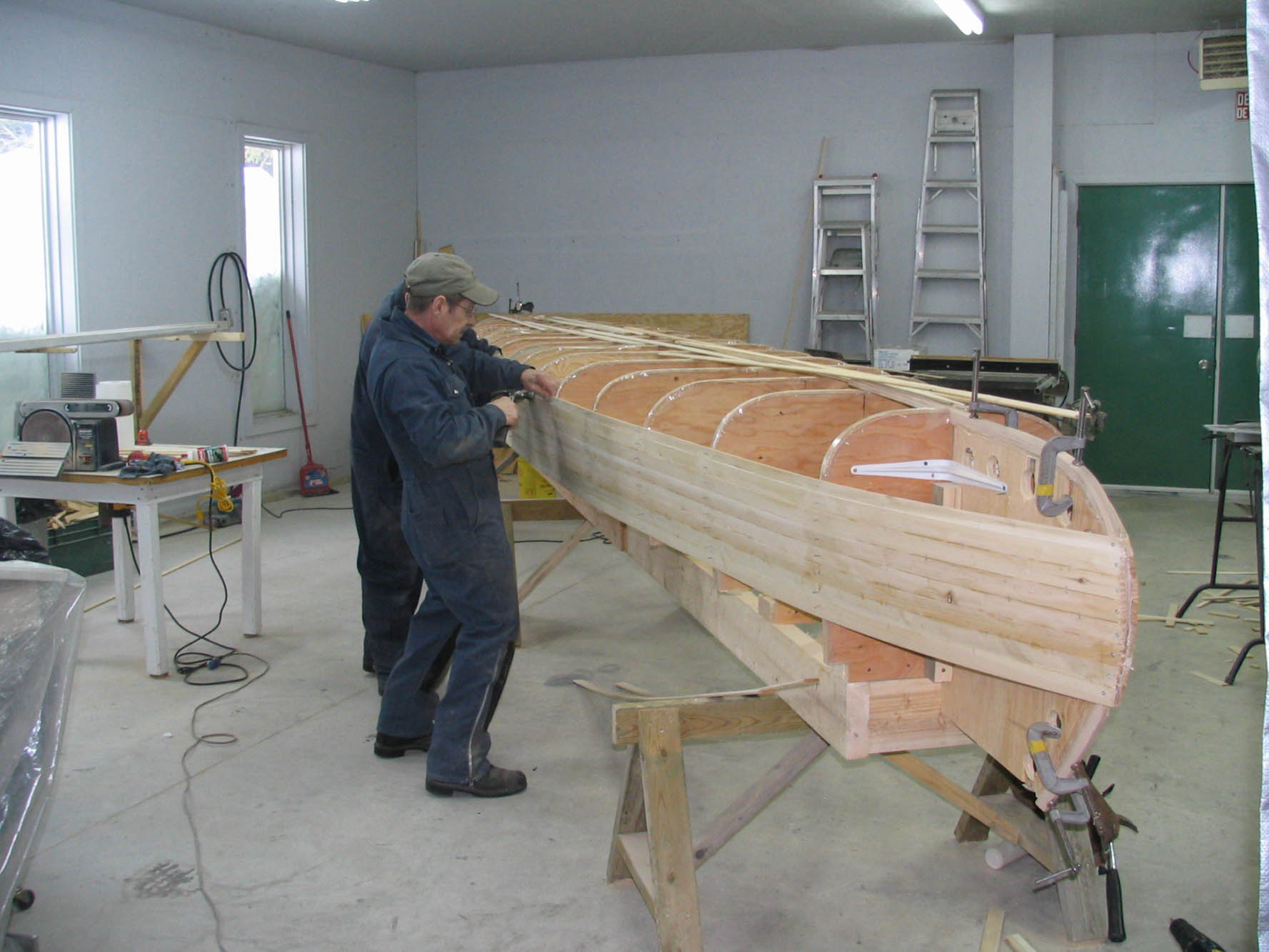
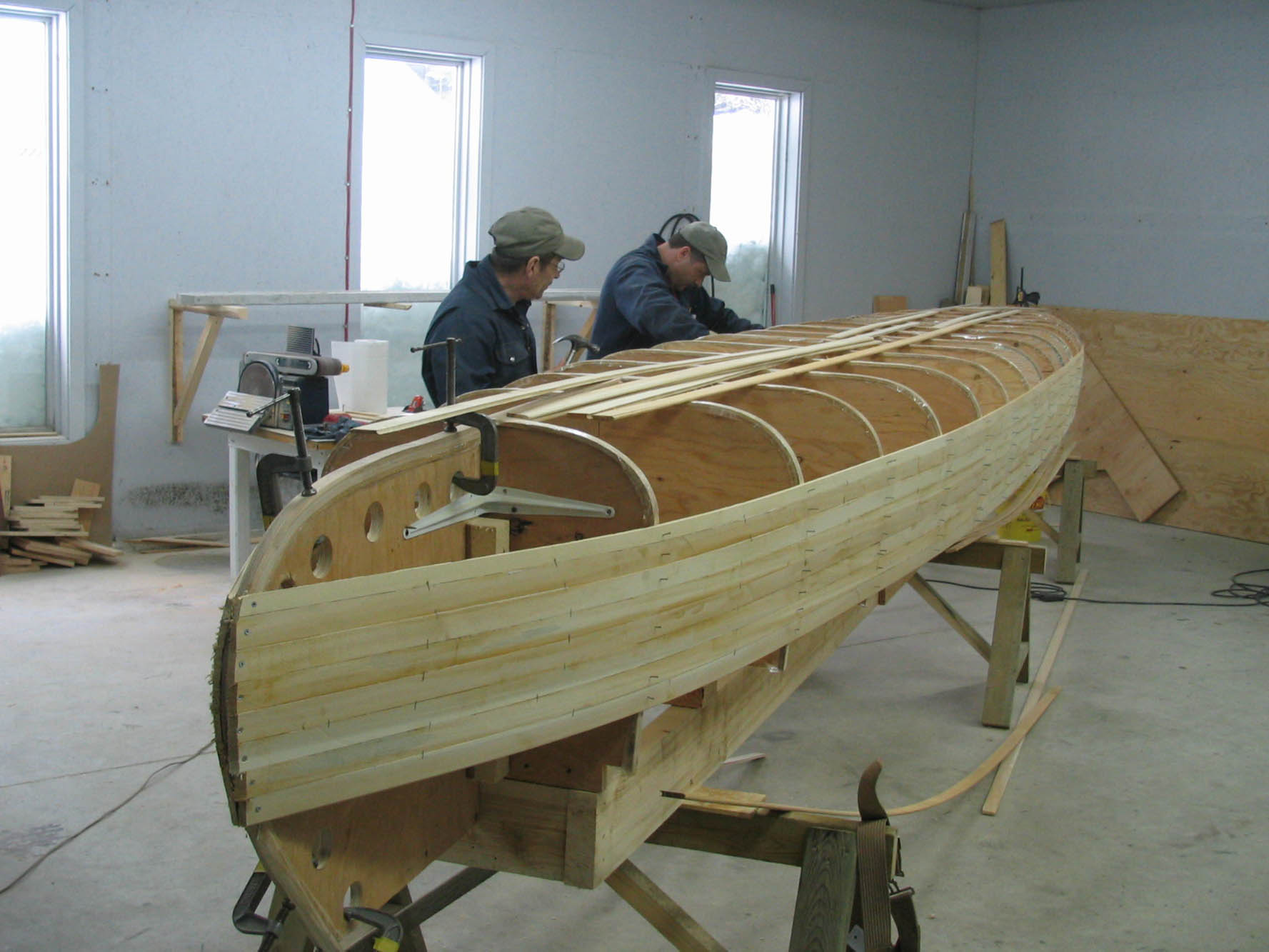
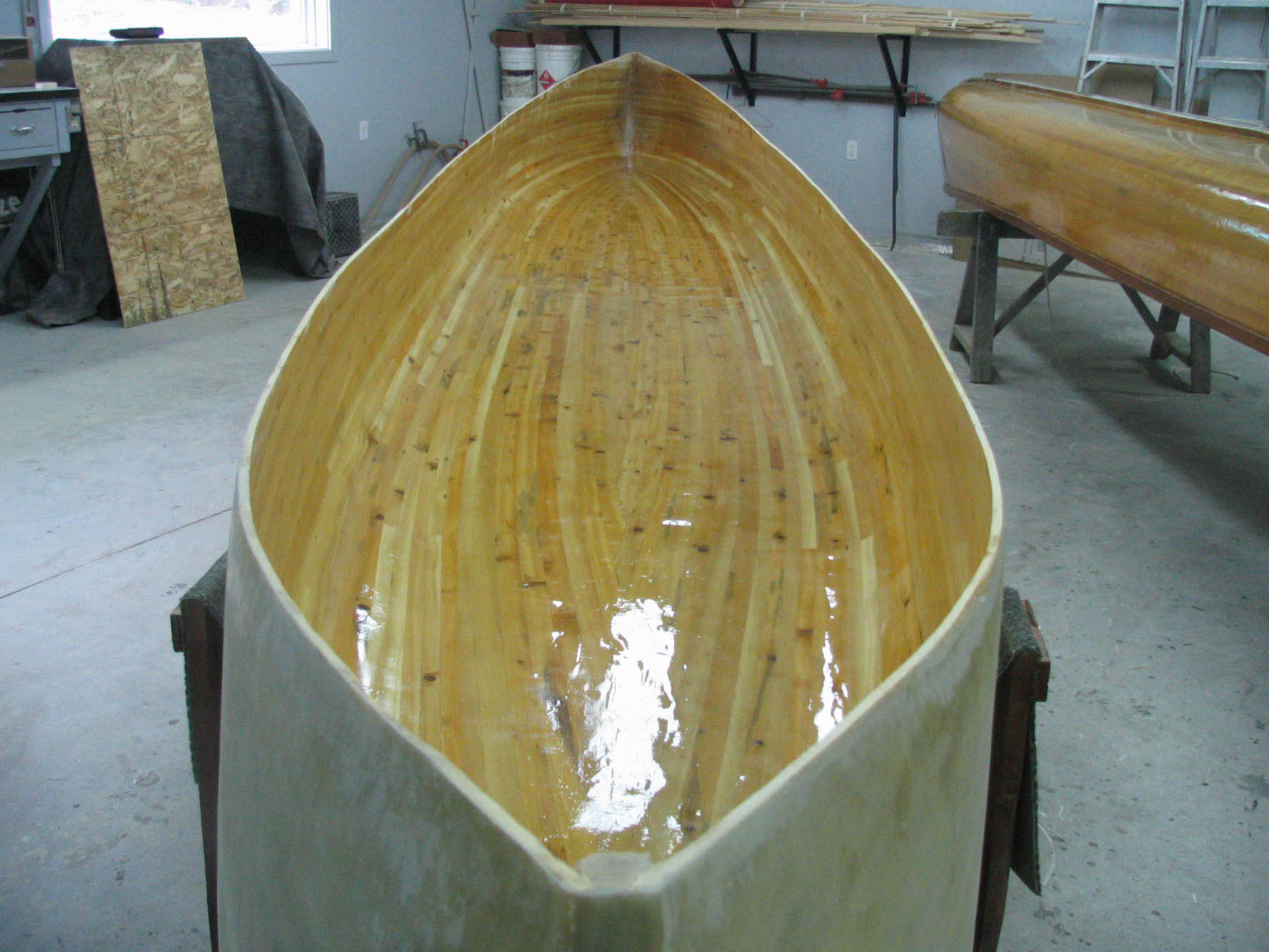
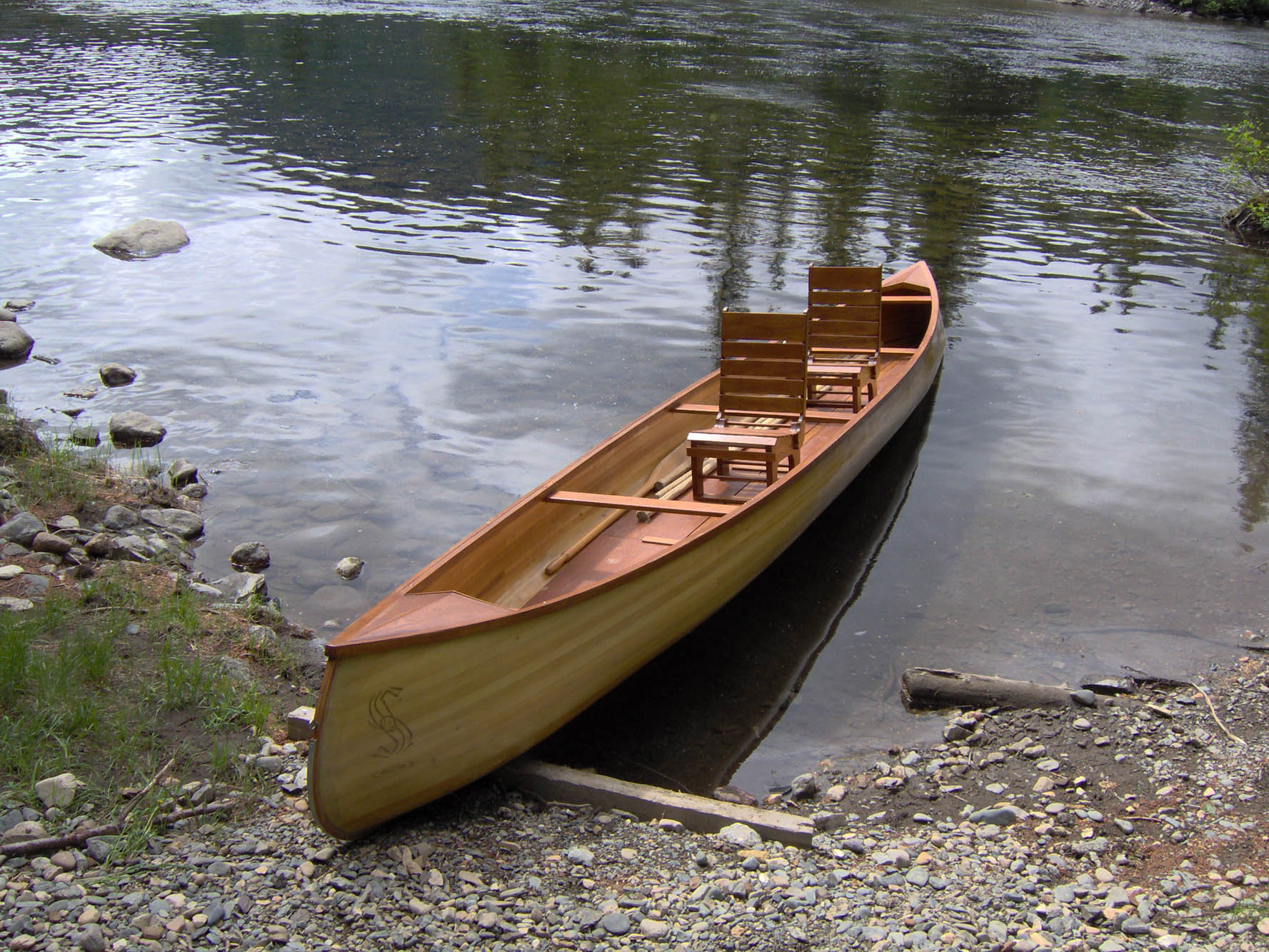
Canoeing down the Upstream sector of the Sainte-Anne River dates back to the early days of fishing on the river. It holds a certain renown as well as a historical and nostalgic flavor that is highly appreciated by those who have experienced it and continue to do so today. To undertake this descent safely, regardless of water conditions, the skill of the guides as well as the quality of the canoes must be impeccable. That is why, in 2005, two of our employees built our own canoes, fully adapted to the river. The final result was impressive! Two magnificent 26-foot canoes capable of comfortably accommodating two guides and two anglers, entirely handcrafted. The photos below will allow you to appreciate all the work required for their construction, up to the final result!




Our Partners
Our varied fields of activity lead us to collaborate with several partners, here are the main ones:
- Société des établissements de plein air du Québec (SÉPAQ)
- Ministry of Natural Resources (Wildlife Sector) (MRNF)
- Fédération québécoise du saumon atlantique / Saumon Québec (FQSA)
- La Fédération québécoise des chasseurs et pêchers (FQCP)
- Sécurité Nature
- Shick-Shock Cooperative Forestry Group
- Quebec Outfitters Federation (FPQ)
- Canada Economic Development (CED)
- Caisse populaire Desjardins de la Haute-Gaspésie
- Ministry of Economy, Science and Innovation of Quebec (MESI)
- Local Development Centre (CLD) of Haute-Gaspésie
- Community Futures Development Corporation (SADC) of Gaspé-Nord
- Chamber of Commerce of Haute-Gaspésie
- Regional County Municipality (MRC) of Haute-Gaspésie
- City of Sainte-Anne-des-Monts
- Association touristique régionale de la Gaspésie (ATRG)
- Tourisme Québec / CITQ
Board of Directors
The Board of Directors currently consists of 5 volunteers who are dedicated to the development of salmon fishing on the Sainte-Anne River, with a focus on resource protection and the quality of the fishing experience. Some board members have been in office for over 20 years! Here is the composition:
- Christian Cyr, president
- Guy Fraser, vice-president
- Francine Dupuis-Girard, director
- William (Bill) Johnson, director
- Diane Thibault, director